Software
The EINSTEIN software guides the user through the whole design process spanning from data acquisition, processing and estimation to the design and quantitative (energy, economic and environmental) evaluation of alternative design options.
The EINSTEIN software provides tools for:
-
structured data collection and processing (status-quo; definition/forecasting of requirements), including consistency and completeness checking and data estimation for missing data where necessary
-
data analysis giving a detailed breakdown of energy demand and residual energy as a function of time and temperature level following the EINSTEIN standard for accountancy of energy flows
-
assisted design of appropriate heating and cooling supply and heat recovery systems: conceptual design and pre-dimensioning.
-
dynamic system simulation, supporting „quick set-up“ of simulations without need for large amount of input settings (e.g. no need for detailed manual configuration of system hydraulics or control strategies)
-
energy, economic and environmental evaluation, including comparative analysis of different options
-
structured semi-automatic reporting
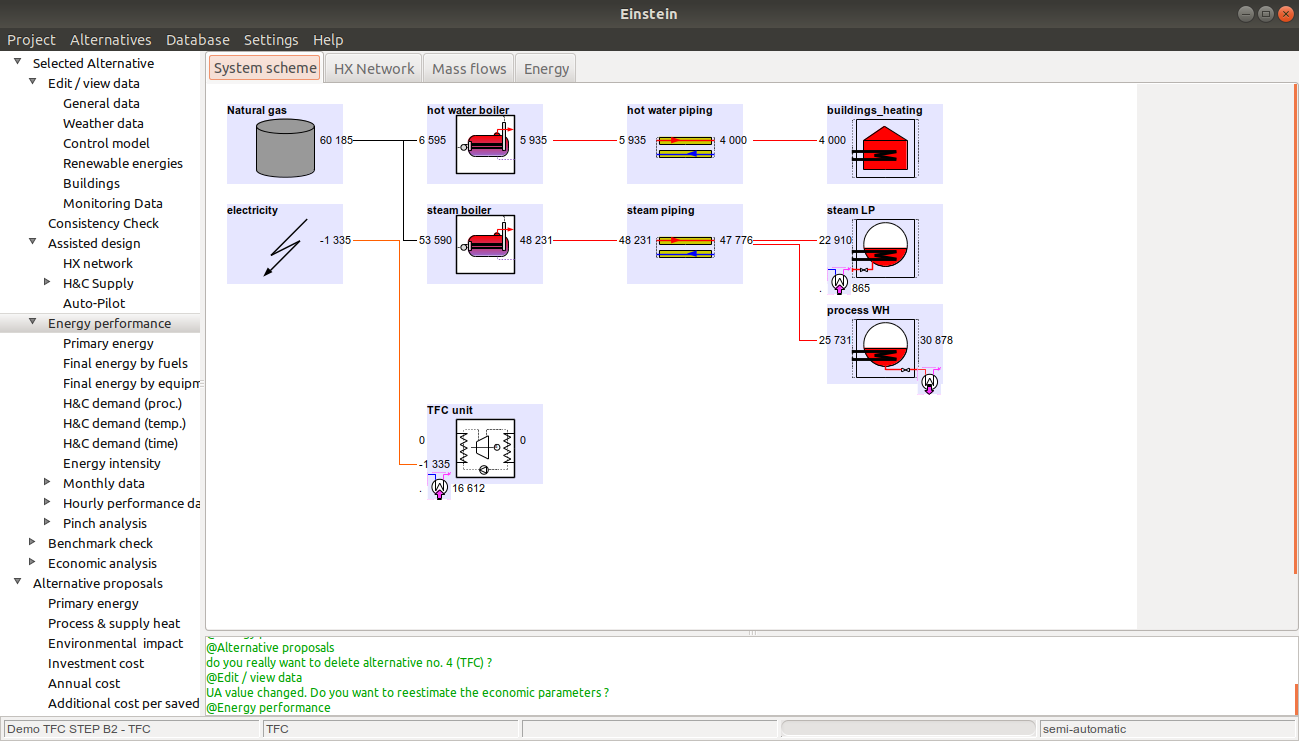
Example for the EINSTEIN interface: graphical system editor
-
differential features to other commonly used related software tools
EINSTEIN incorporates modules for dynamic system simulation and for pinch analysis and optimisation of heat exchanger networks, but it’s objective is not to compete with specialised tools for this purpose. The objective and distinctive feature of EINSTEIN is integrating this and other modules into a whole package with the focus on ease of use for quick feasibility analysis and system (pre-)design.
The following tables compares the features of EINSTEIN to some other software tools widely used in energy systems design.
Disclaimer: the information given in this table is based on a very quick screening and in some cases limited or outdated knowledge about recent developments of each of these tools. There may me several other tools not mentioned there. If there are errors, these are not intentional. The objective of the table is to highlight where, in my opinion, are the differential features and advantages of the EINSTEIN software. There is no commercial interest behind EINSTEIN and therefore, it is not my interest to present any of the listed tools better or worse than it really is. Please send an e-mail to inform us about any corrections or additional information that should be added.
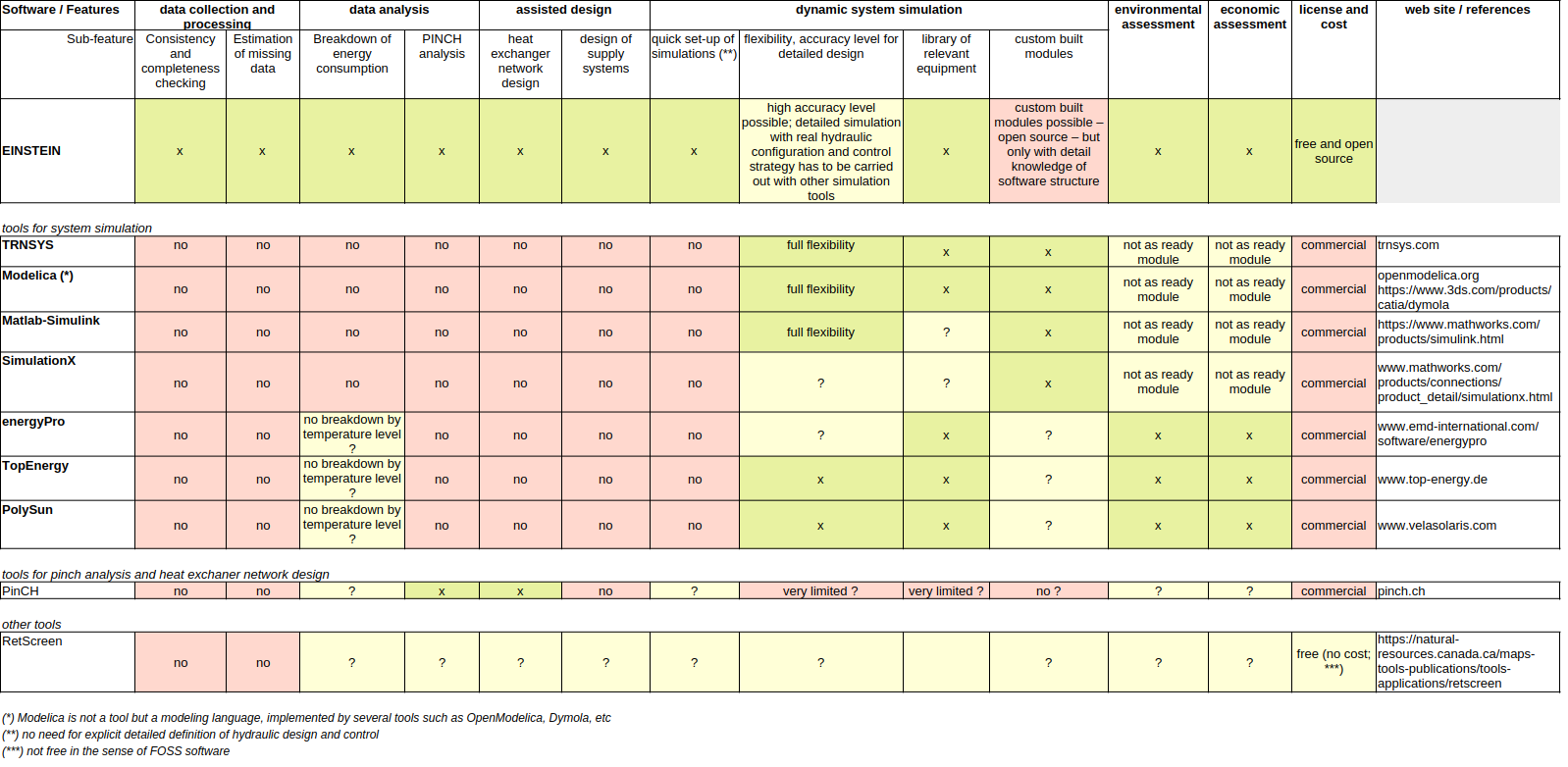
Comparison of EINSTEIN with other related software tools.